When people ask which is true about investments and risk, they are usually trying to solve a deeper problem. They want to grow their money without losing it. That sounds simple, but the reality is more complex. Every investment carries some level of uncertainty. That uncertainty is what we call risk.
The most important truth is this. Higher potential returns usually come with higher risk. This idea is not just theory. It shows up in stocks, real estate, startups, and even savings accounts. If something promises high returns with no risk, it is either misunderstood or misleading.
At the same time, risk does not mean danger in a reckless sense. It simply means the outcome is not guaranteed. Understanding that difference is the first step toward making smarter decisions.
Risk is not the enemy
Many beginners think risk is something to avoid completely. That belief leads to missed opportunities. The real goal is not to eliminate risk, but to understand and manage it.
For example, keeping all your money in cash feels safe. But over time, inflation reduces its value. This is a hidden risk that many people ignore. On the other hand, investing in stocks may feel risky in the short term, but historically it has helped people build wealth over long periods.
According to the U.S. Securities and Exchange Commission, risk and return are closely linked, and investors must be willing to accept some level of uncertainty to achieve growth.
So when thinking about which is true about investments and risk, remember that avoiding risk entirely can be just as harmful as taking too much of it.
Types of investment risk
Not all risks are the same. Each type affects your investment in a different way. Understanding these helps you make better choices.
Here are some of the most common types:
- Market risk which comes from overall market movements
- Inflation risk which reduces purchasing power over time
- Credit risk which happens when a borrower fails to repay
- Liquidity risk which makes it hard to sell an asset quickly
- Interest rate risk which affects bonds and loans
Each of these risks plays a role in shaping your returns. Ignoring them can lead to poor decisions, while understanding them gives you control.
Risk and reward relationship
The relationship between risk and reward is at the core of investing. You cannot separate the two. If you want higher returns, you must accept more uncertainty.
Let us look at a simple comparison:
| Investment Type | Risk Level | Potential Return |
|---|---|---|
| Savings Account | Very Low | Very Low |
| Government Bonds | Low | Low |
| Index Funds | Medium | Medium |
| Individual Stocks | High | High |
| Startups | Very High | Very High |
This table highlights a key truth about investment risk and return. There is no shortcut. Every step up in return potential comes with increased risk.
The goal is not to chase the highest return. The goal is to find a balance that matches your comfort level and financial goals.
Time changes risk
One of the most overlooked aspects of investing is time. Risk behaves differently depending on how long you stay invested.
In the short term, markets can be unpredictable. Prices go up and down due to news, emotions, and global events. This creates volatility, which many people mistake for permanent risk.
However, over the long term, many investments tend to stabilize. Historical data shows that diversified stock investments have often delivered positive returns over extended periods.
The Morningstar research explains how staying invested over time reduces the impact of short term fluctuations.
This leads to another key insight when asking which is true about investments and risk. Time can reduce certain types of risk, especially market volatility, but it does not remove all risks.
Diversification reduces risk
One of the smartest ways to manage risk is diversification. This simply means spreading your investments across different assets.
Instead of putting all your money into one stock or one type of investment, you divide it among several. This way, if one investment performs poorly, others may perform better and balance the overall outcome.
A diversified portfolio might include:
- Stocks from different industries
- Bonds with varying maturity periods
- Real estate or property funds
- International investments
Diversification does not eliminate risk completely. But it reduces the chance of a major loss.
Understanding this principle is essential when evaluating risk management in investments.

Emotional risk
Most people focus on market risks but ignore emotional risk. This is the risk of making decisions based on fear or greed.
For example, during a market crash, many investors panic and sell their assets at a loss. Later, when the market recovers, they miss out on gains. On the other hand, during a boom, people may invest blindly without proper research.
Both behaviors are driven by emotion, not logic.
Learning to control emotions is just as important as understanding financial concepts. It can protect you from costly mistakes.
Risk tolerance matters
Every person has a different level of comfort with risk. This is called risk tolerance.
Some people are comfortable with fluctuations in their investment value. Others prefer stability even if it means lower returns.
Factors that influence risk tolerance include:
- Age
- Income stability
- Financial goals
- Personal mindset
For example, a young investor with a steady income may accept higher risk because they have time to recover from losses. A retiree may prefer safer investments to protect their savings.
This is why there is no single answer to which is true about investments and risk. The truth depends on the individual as well as the investment.
Misconceptions about risk
There are several common myths that can confuse investors.
One major misconception is that risk always leads to loss. In reality, risk creates the possibility of both loss and gain.
Another myth is that safe investments are always better. While they protect your money, they may not help it grow enough to meet long term goals.
A third misconception is that experts can predict the market perfectly. Even experienced investors cannot eliminate uncertainty. They can only manage it.
Understanding these myths helps you develop a more realistic view of investing.
Measuring risk
To truly understand which is true about investments and risk, you need a way to measure risk instead of guessing it. Investors use several methods to evaluate how risky an investment might be.
One common measure is volatility. This shows how much an investment price moves up and down over time. Higher volatility usually means higher uncertainty. Another important concept is standard deviation, which gives a clearer picture of how widely returns can vary from the average.
There is also something called beta. It compares how much a stock moves relative to the overall market. A beta above one means the investment is more volatile than the market, while below one means it is more stable.
These tools do not predict the future, but they help you understand the level of uncertainty involved in different investment options.
Risk versus uncertainty
People often mix up risk and uncertainty, but they are not the same thing. Risk can be estimated using data and probabilities. Uncertainty, on the other hand, cannot always be measured.
For example, historical stock data allows investors to estimate possible returns. That is risk. But unexpected events like political changes or global crises fall under uncertainty because they are harder to predict.
This distinction matters because it shapes how you approach decisions. When thinking about investment risk and uncertainty, a smart investor prepares for both, not just one.
Real world examples
Understanding theory is useful, but real world examples make things clearer.
Consider someone who invested heavily in a single company. If that company performs well, the return can be huge. But if it fails, the loss can be severe. This is concentrated risk.
Now compare that with someone who invests in a broad market index fund. The return might be more moderate, but the risk of losing everything is much lower.
Another example is real estate. Property values can rise over time, but they are also affected by location, demand, and economic conditions. Even something that feels stable carries risk.
These examples highlight a core truth about risk in different investments. The structure of your investment matters just as much as the type.
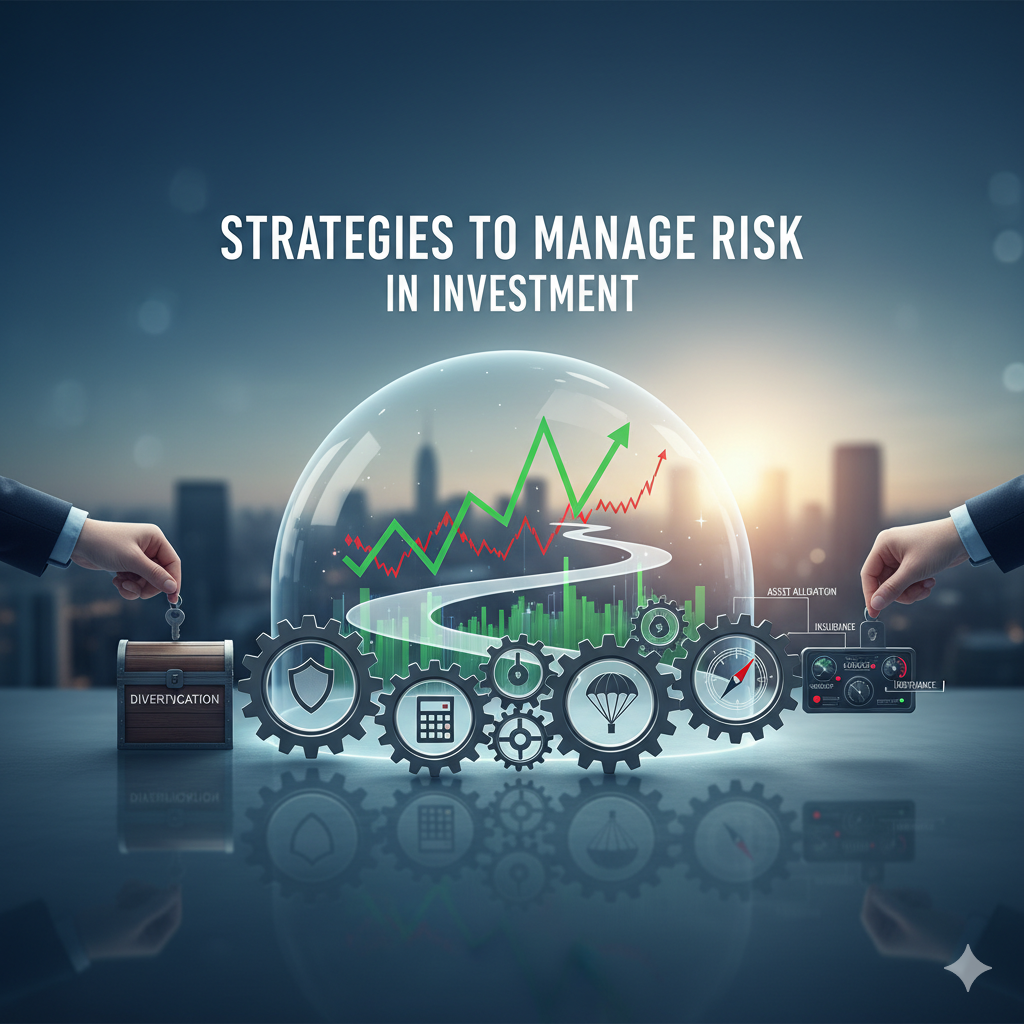
Strategies to manage risk
Managing risk is where smart investing really begins. It is not about avoiding risk completely, but about controlling how much you take and where you take it.
Here are some practical strategies:
- Asset allocation which spreads money across different asset classes
- Regular investing which reduces the impact of market timing
- Rebalancing which keeps your portfolio aligned with your goals
- Research and analysis before making decisions
- Emergency funds to avoid selling investments in tough times
Each of these methods reduces exposure to unnecessary losses while still allowing growth.
When you apply these strategies, the question of which is true about investments and risk becomes easier to answer in your own context.
When deciding how much to allocate to different investments, it helps to follow a structured plan. If you are unsure where to begin, you can read this detailed guide on how much you should invest in stocks to build a strong foundation.
The role of knowledge
Knowledge plays a powerful role in reducing risk. The more you understand an investment, the better decisions you can make.
This does not mean you need to become a financial expert overnight. But it does mean taking time to learn the basics before putting your money into something.
Reliable sources can help build this understanding. For example, the Investopedia guide on risk explains how different factors influence investment outcomes.
When you invest blindly, you increase your chances of loss. When you invest with knowledge, you turn uncertainty into calculated decisions.
Risk and inflation
Inflation is often ignored, but it plays a major role in shaping your financial future. It quietly reduces the value of your money over time.
If your investments do not grow faster than inflation, you are effectively losing purchasing power. This is why simply saving money is not always enough.
Let us look at a simple comparison:
| Scenario | Annual Return | Inflation Rate | Real Outcome |
|---|---|---|---|
| Savings Only | 3 percent | 5 percent | Loss in value |
| Balanced Portfolio | 7 percent | 5 percent | Moderate growth |
| High Growth Investments | 12 percent | 5 percent | Strong growth |
This table shows a crucial truth about inflation risk and investment returns. Even low risk strategies can lead to loss if they do not keep up with inflation.
Short term versus long term thinking
Your time horizon changes how risk affects you. Short term investors often face higher volatility because they are exposed to immediate market movements.
Long term investors, however, can ride out fluctuations and benefit from overall growth trends. This is why patience is one of the most underrated skills in investing.
Many studies have shown that long term investing reduces the chances of negative returns in diversified portfolios. This does not guarantee success, but it improves the odds.
When evaluating which is true about investments and risk, time horizon is one of the most important factors to consider.
Over diversification
While diversification is helpful, too much of it can reduce your returns. This is known as over diversification.
If you spread your money across too many investments, the gains from strong performers may be diluted. Instead of balancing risk, you may end up limiting your growth.
The key is balance. You want enough diversification to reduce risk, but not so much that it weakens your returns.
This highlights a subtle but important point about risk management in investing. More is not always better.
Risk in modern investing
Today, investing is more accessible than ever. Apps and online platforms allow anyone to invest with just a few clicks.
While this is a positive development, it also introduces new risks. Easy access can lead to impulsive decisions. Social media trends can influence people to invest without proper understanding.
Cryptocurrency is a good example. It offers high potential returns, but also extreme volatility. Many people enter this space without fully understanding the risks involved.
Modern investing requires discipline. The tools are powerful, but they must be used wisely.
Building a risk aware mindset
At its core, investing is not just about numbers. It is about mindset. A risk aware investor does not chase quick profits or panic during downturns.
Instead, they focus on long term goals, stay consistent, and make decisions based on logic rather than emotion.
Here are a few habits that help build this mindset:
- Think in years, not days
- Accept that losses are part of the journey
- Avoid comparing your progress with others
- Stay informed but not overwhelmed
- Stick to a clear plan
These habits create stability in an uncertain environment.
Building a balanced approach
At this stage, the question which is true about investments and risk should feel clearer, but applying that understanding in real life is where most people struggle. A balanced approach is not about choosing the safest or the riskiest path. It is about aligning your investments with your goals, time horizon, and personal comfort.
A strong approach begins with clarity. If your goal is long term wealth, you can accept more short term fluctuations. If your goal is capital preservation, stability becomes more important than growth. The key is to avoid random decisions and instead follow a structured plan.
Balance also means adjusting over time. As your income grows or your goals change, your risk exposure should evolve with you. What worked at age twenty may not work at forty. This flexibility is a major part of smart investment risk management.
The power of consistency
Consistency often beats complexity. Many investors fail not because they lack knowledge, but because they lack discipline. They jump in and out of investments based on short term trends.
A consistent strategy such as investing a fixed amount regularly can reduce the impact of market ups and downs. This approach builds momentum over time and removes the pressure of trying to predict the perfect moment.
This is another important truth when thinking about which is true about investments and risk. You do not need perfect timing to succeed. You need consistency and patience.
Comparing investment choices
Different investment options behave differently under risk. Seeing them side by side can help you understand how they fit into your strategy.
| Investment Option | Stability | Growth Potential | Risk Exposure |
|---|---|---|---|
| Cash Savings | Very High | Very Low | Very Low |
| Bonds | High | Low | Low |
| Mutual Funds | Medium | Medium | Medium |
| Stocks | Low | High | High |
| Cryptocurrency | Very Low | Very High | Very High |
This comparison shows that no single option is perfect. Each has strengths and weaknesses. The best choice depends on your situation.
Understanding this table reinforces the idea that investment risk and return are always connected.
When risk becomes dangerous
Risk itself is not harmful, but unmanaged risk can be. Problems arise when investors take risks they do not understand or cannot afford.
For example, borrowing money to invest in highly volatile assets can lead to serious financial trouble. Similarly, putting all your savings into one opportunity increases your exposure to loss.
Dangerous risk often has these signs:
- Lack of research or understanding
- Overconfidence in quick profits
- Ignoring diversification
- Investing money you cannot afford to lose
Recognizing these patterns can protect you from major setbacks. It helps you separate calculated risk from reckless behavior.
The role of patience
Patience is one of the most valuable traits in investing. Markets move in cycles, and not every period will be profitable.
During downturns, patient investors stay focused on their long term plan. They do not panic or make impulsive decisions. Over time, this approach often leads to better outcomes.
Patience also allows compounding to work. Small gains build on each other, creating significant growth over years.
This reinforces a powerful truth about long term investment risk. Time rewards discipline and punishes impatience.
Learning from mistakes
Every investor makes mistakes. The difference between success and failure is how you respond to them.
Instead of avoiding risk completely after a loss, it is better to analyze what went wrong. Was the decision based on emotion? Was there a lack of research? Was the risk too high for your situation?
Learning from these experiences improves your decision making. It turns setbacks into valuable lessons.
This mindset helps you better understand which is true about investments and risk in a practical, personal way.
Technology and data
Modern tools provide access to information that was once limited to professionals. Investors can now track performance, analyze trends, and study market behavior with ease.
While this is helpful, it also creates information overload. Too much data can lead to confusion or overthinking.
The key is to focus on relevant information. Look at fundamentals, long term trends, and credible sources instead of reacting to every piece of news.
Used correctly, technology can support better decisions and reduce unnecessary investment risks.

Frequently Asked Questions
What is the most important truth about investments and risk?
The most important truth is that higher returns usually require higher risk. However, this does not mean you should always choose high risk options. Instead, you should match your risk level with your financial goals and comfort.
How can beginners understand which is true about investments and risk?
To begin with, focus on learning basic concepts like diversification, time horizon, and risk tolerance. Then, start with simple investments and gradually build your understanding. This approach reduces mistakes and builds confidence.
Is it possible to invest without any risk?
In reality, no investment is completely risk free. Even keeping money in cash carries inflation risk. So while some options are safer than others, all investments involve some level of risk.
Why does time reduce investment risk?
Over time, short term market fluctuations tend to balance out. As a result, long term investors often experience more stable returns compared to short term traders. This is why patience plays a key role in managing risk.
How does diversification help manage risk?
Diversification spreads your money across different assets. Because of this, poor performance in one area can be balanced by better performance in another. This reduces the overall impact of losses.
What mistakes should investors avoid when thinking about risk?
Most importantly, avoid emotional decisions, lack of research, and over concentration in one investment. In addition, never invest money that you cannot afford to lose. These mistakes increase unnecessary risk.
So, which is true about investments and risk in simple terms?
In simple terms, risk and return are connected, and smart investing is about managing that relationship wisely. You cannot avoid risk, but you can control how much you take and how you respond to it.
Conclusion
At its core, investing is about making decisions under uncertainty. There is no way to remove risk completely, but there are many ways to manage it effectively.
The most honest answer to which is true about investments and risk is this. Risk is unavoidable, but it can be controlled, understood, and used to your advantage.
When you combine knowledge, discipline, and a clear strategy, risk becomes a tool rather than a threat. It allows you to pursue growth while staying grounded in reality.