The question are watches a good investment has become far more common than it used to be. What was once a niche interest among collectors has now entered mainstream financial discussions. People are no longer buying watches only for style or status. They are thinking in terms of long term value, resale potential, and asset growth.
This shift did not happen overnight. Over the past decade, certain luxury watches have delivered returns that surprised even experienced investors. Some models have doubled or even tripled in value, turning a personal accessory into a serious financial asset.
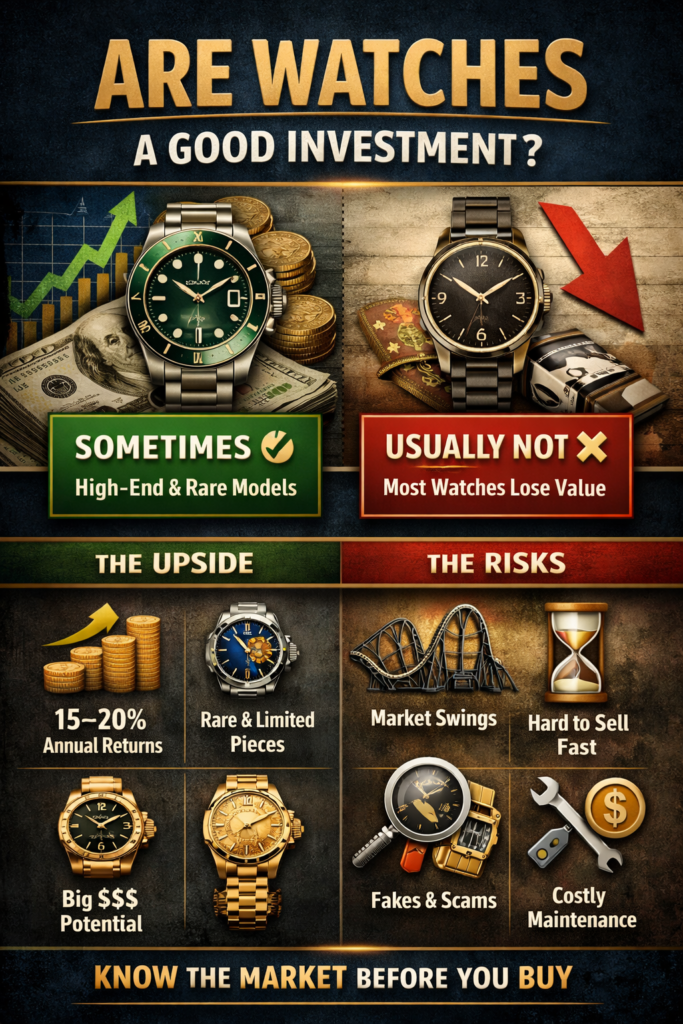
However, this does not mean every watch is a smart investment. In fact, most watches lose value after purchase. The real challenge is understanding which ones have investment potential and why.
This article breaks everything down in a clear and honest way so you can make informed decisions.
The growing appeal of watch investing
The rise of watch investing is closely linked to scarcity and global demand. High end brands deliberately limit production, which creates a gap between supply and demand. That gap is where value starts to grow.
In recent years, reports such as the Knight Frank Wealth Report have highlighted how luxury assets, including watches, have performed strongly compared to traditional investments.
What makes watches unique is that they combine function with value. Unlike stocks or bonds, a watch is something you can wear, enjoy, and even pass down to future generations. This dual nature adds emotional appeal, but it also requires careful thinking if your main goal is financial return.
What determines a watch’s investment value
If you want a clear answer to are watches a good investment, you need to understand what actually drives watch investment value.
Several key factors come into play:
- Brand strength and reputation
- Limited availability or rarity
- Condition and originality
- Market demand
- Historical importance
These elements work together. A watch from a respected brand with limited production and strong demand has a much higher chance of appreciating over time.
On the other hand, if one or more of these factors are weak, the chances of seeing meaningful returns drop significantly.
Top brands that hold value
Not all brands perform equally in terms of investment watches. A small group dominates the market due to consistent demand and strong brand history.
Some of the most recognized names include:
- Rolex
- Patek Philippe
- Audemars Piguet
- Omega
These brands are known for craftsmanship, heritage, and reliability in maintaining resale value. For example, many Rolex sports models often sell above retail price because of limited availability.
Still, it is important to understand that even within these brands, not every model performs well. Choosing the right model matters just as much as choosing the right brand.
How watch prices actually grow
The way watch value appreciation works is different from traditional investments. Prices are influenced by both fundamental factors and market behavior.
Here is a simple breakdown:
| Factor | Effect on Value |
|---|---|
| Limited production | Strong increase |
| High collector demand | Strong increase |
| Media or celebrity attention | Short term boost |
| Poor condition | Decrease |
| High availability | Decrease |
This shows that while hype can push prices up quickly, long term growth depends on real demand and scarcity.
Scarcity and demand
Scarcity is one of the biggest drivers behind luxury watch investment success. When a watch is hard to obtain, demand naturally increases. Buyers who cannot get it at retail turn to the secondary market and are often willing to pay a premium.
This creates opportunities for profit, but it also introduces risk. If demand drops or supply increases, prices can fall just as quickly.
Understanding this balance is essential before making any investment decision.
Condition and authenticity matter
Condition plays a huge role in determining resale value. A watch that is well maintained with original parts will always be more valuable than one that has been heavily worn or altered.
Authenticity is equally important. Original box and papers can significantly increase the value of a watch in the resale market.
Hodinkee provide useful insights about how collectors evaluate watches. Ignoring these details is one of the most common mistakes beginners make.
Emotional value versus financial thinking
One important point that often gets overlooked is the difference between emotional value and financial return.
A watch can mean a lot to you personally, but that does not automatically make it a good investment. Many people buy watches based on personal taste and later realize that the market does not value them the same way.
If your goal is financial growth, decisions should be based on research, not emotion.
That said, the best scenario is when you find a watch that offers both enjoyment and investment potential.
Market cycles and timing
The watch market moves in cycles, just like other asset classes. There are periods of rapid growth followed by corrections.
During high demand phases, prices can rise quickly. During downturns, some watches lose value or remain stagnant.
Timing the market perfectly is difficult, even for experienced collectors. This is why a long term approach is usually more reliable than trying to make quick profits.
Risks you should understand
Before deciding are watches a good investment, it is important to look beyond success stories and focus on the risks.
One major issue is liquidity. Unlike stocks, you cannot sell a watch instantly. Finding the right buyer at the right price can take time, especially if the market is slow.
Another risk is volatility driven by trends. A watch that is highly desirable today may lose attention tomorrow. This is especially true for models that rise quickly بسبب hype rather than long term demand.
Counterfeiting is also a serious concern. Without proper knowledge, it is easy to end up with a fake or heavily modified piece. This can destroy your investment value completely.
There are also ongoing costs that many people ignore:
- Servicing and maintenance
- Insurance expenses
- Dealer or platform commissions during resale
These costs reduce your actual return, so they must be considered from the start.
Comparing watches with other investments
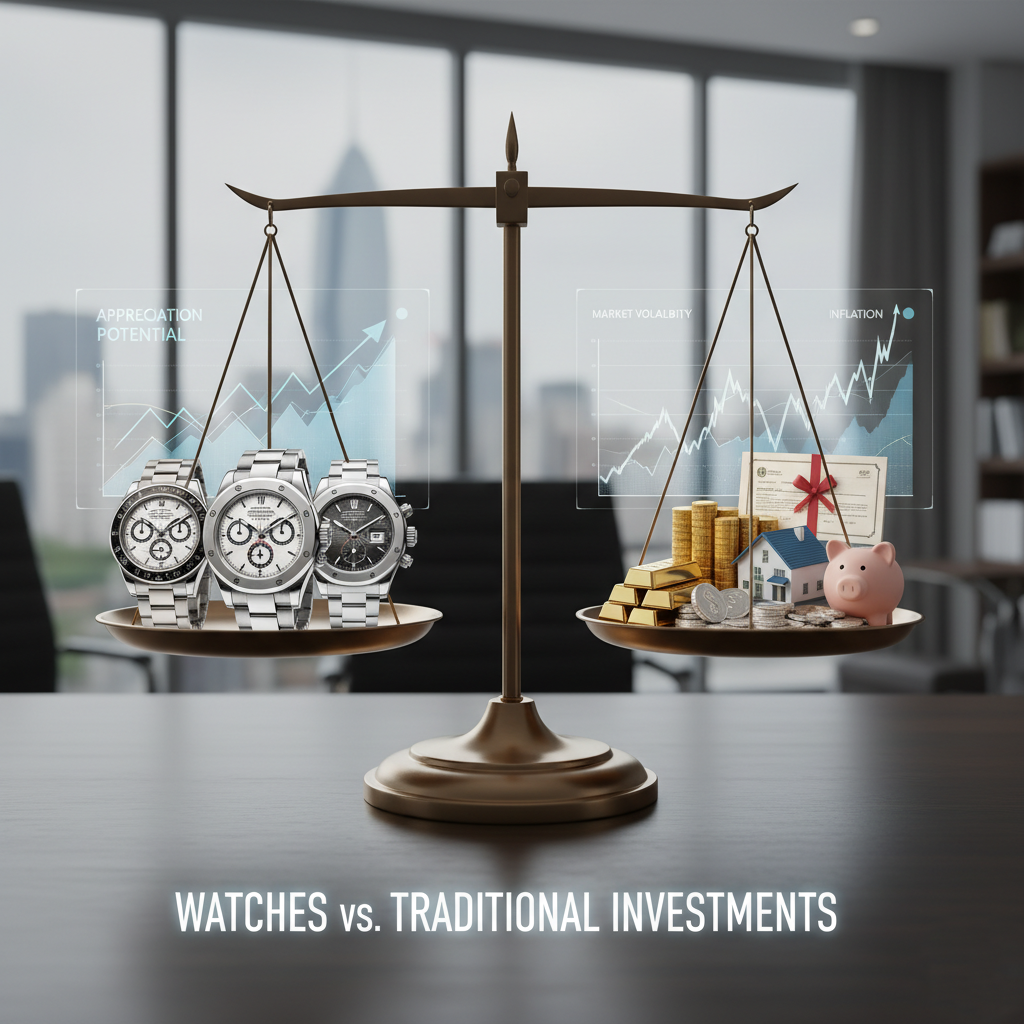
To properly answer are watches a good investment, it helps to compare them with traditional asset classes.
| Asset Type | Liquidity | Risk Level | Return Potential |
|---|---|---|---|
| Stocks | High | Medium | High |
| Real estate | Medium | Medium | Stable |
| Watches | Low to medium | Variable | Unpredictable |
Watches offer a unique mix of collectibility and potential financial return. However, they lack the transparency and ease of trading that you get with stocks.
This makes them more suitable as a secondary or alternative asset rather than your primary investment strategy.
Flipping versus holding
There are two main strategies in watch investing, and each comes with its own mindset.
Short term flipping focuses on buying a watch and selling it quickly for profit. This usually depends on market hype, limited releases, or sudden demand spikes.
Long term holding is about selecting high quality pieces and keeping them for years. This approach relies on steady appreciation and brand strength.
Here is how they compare:
- Flipping offers faster returns but comes with higher risk and timing pressure
- Holding requires patience but provides more stability over time
For most people, long term holding is the safer and more realistic approach.
Influence of trends and culture
The value of luxury watches is not driven by numbers alone. Cultural influence plays a powerful role.
When celebrities or influencers wear a particular model, demand can increase rapidly. Social media amplifies this effect, making certain watches extremely popular in a short time.
However, this kind of demand is often temporary. Once attention shifts, prices can fall.
This is why relying only on trends is risky. A strong investment watch should have lasting demand beyond short term hype.
Entry points for beginners
Not everyone can start with high end brands, and that is completely fine. There are entry level options that offer decent resale potential and help you understand the market.
Some accessible brands include:
- Seiko
- Tissot
- Hamilton
These watches may not deliver massive returns, but they can hold value relatively well. More importantly, they allow you to gain experience without taking large financial risks.
Starting small is often the smartest move.
How to research properly
Strong research is the foundation of any successful watch investment strategy.
Instead of guessing, you should look at real data and market behavior. Platforms like Chrono24 provide pricing trends and listings that reflect actual demand.
When researching, focus on:
- Historical price movement
- Production numbers
- Current demand levels
- Auction results
This information helps you identify patterns and avoid overpaying.
Patience as a key factor
Patience is one of the most underrated aspects of investment watches.
Unlike fast moving markets, watches often take years to show meaningful appreciation. Selling too early can limit your gains, while holding too long without strategy can also be a mistake.
The key is balance. Monitor the market, but avoid emotional decisions.
Why diversification still matters
Even if you strongly believe are watches a good investment, putting all your money into watches is risky.
Diversification protects you from unexpected market changes. Watches should be part of a broader portfolio that includes other assets like stocks or real estate.
This approach reduces overall risk and creates more stable long term growth.
If you are also exploring other physical assets, you might want to compare options like precious metals, which you can understand better in this detailed guide on gold vs silver investment
Practical buying tips
If you are serious about entering the watch investment market, your approach needs to be disciplined. Small details often make a big difference in determining whether a watch holds or increases its investment value.
First, always buy from trusted and verified sources. Authorized dealers or well known marketplaces reduce the chances of fraud and ensure authenticity.
Second, pay close attention to condition. Even minor wear can affect resale value, especially for collectors who prioritize originality.
Third, keep everything that comes with the watch. Original box, papers, receipts, and service history all contribute to stronger market value when you decide to sell.
Finally, avoid impulsive buying. Take time to study the model, understand demand, and compare prices before making a decision.
When watches fail as investments
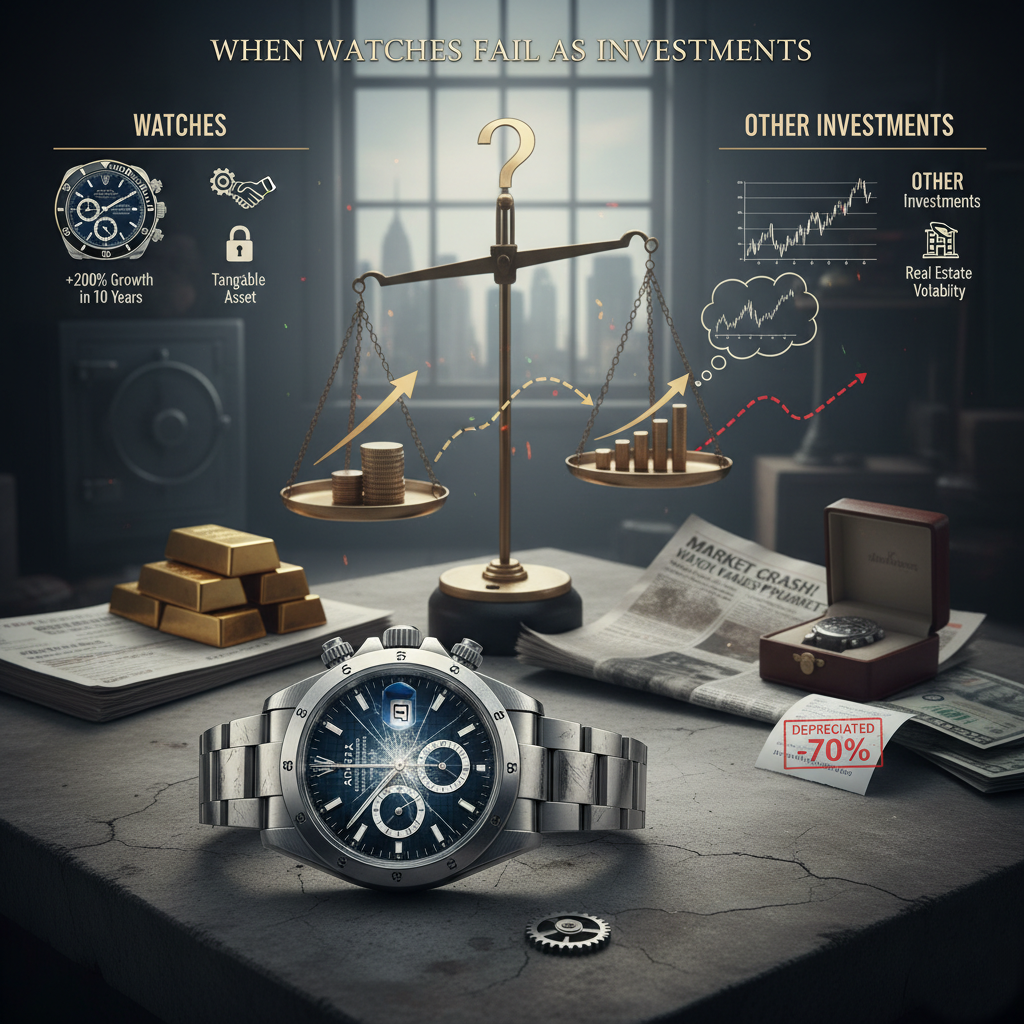
It is just as important to understand when the answer to are watches a good investment is no.
Many watches lose value the moment they are purchased. This is especially true for mass produced models and fashion brands that focus more on design than craftsmanship.
These types of watches often lack long term demand, which means their resale potential is limited.
This does not mean they are bad purchases. If you enjoy wearing them, they still provide value in a personal sense. But from a financial perspective, they should not be considered investment watches.
Being honest about this can save you from unrealistic expectations.
Long term outlook
The future of watch investing looks promising, but it is not guaranteed.
Demand for luxury watches continues to grow globally, especially in emerging markets. At the same time, major brands are becoming more controlled in how they release new models, which helps maintain scarcity.
However, economic conditions, changing tastes, and global trends will always influence prices. No asset is immune to shifts in demand.
While this resource focuses on gold, it offers useful insight into how physical assets behave compared to financial instruments.
Frequently Asked Questions
Are watches a good investment for beginners
To start with, are watches a good investment for beginners depends on your approach. If you begin with smaller, well researched purchases and focus on learning the market, it can be a practical entry point into alternative investments.
Do all luxury watches increase in value
However, not all luxury watches appreciate. While certain models gain value due to rarity and demand, many remain stable or even decline. This is why understanding market demand is essential.
How long should you hold an investment watch
In most cases, holding a watch for several years improves your chances of seeing growth. Although short term gains are possible, long term holding is generally more reliable for building investment value.
Is it better to wear or store an investment watch
Interestingly, you can wear your watch without damaging its value if it is properly maintained. However, keeping it in excellent condition is crucial for protecting resale value over time.
Are watches safer than stocks
On the other hand, watches are not necessarily safer than stocks. They are less liquid and more dependent on trends, which can increase risk. Still, they can play a role in diversifying your overall portfolio.
Where can you track watch prices
Finally, if you want accurate data, platforms like Chrono24 and trusted publications like Hodinkee provide valuable insights into watch market trends, helping you make informed decisions.
Conclusion
So, coming back to the main question, are watches a good investment?
The answer is yes, but only in specific situations.
If you choose carefully, focus on strong brands, and think long term, watches can offer both enjoyment and financial return. They are one of the few assets that combine personal satisfaction with investment potential.
However, if you rely on trends, ignore research, or expect quick profits, the results can be disappointing.
The key lies in understanding the market, managing risk, and staying patient. Watch investment value is not created overnight. It is built through knowledge and careful decisions.