Investment banking is a highly prestigious and lucrative career path. It involves assisting companies, institutions, and governments in raising capital, advising on mergers and acquisitions, and managing financial assets. Given the responsibilities, skills, and long hours associated with the job, it’s no surprise that investment bankers are compensated handsomely. However, the answer to how much investment bankers make isn’t straightforward because their income depends on multiple factors such as experience, location, firm size, and performance.
In this article, we will explore in detail the different factors affecting the salary of investment bankers, what their compensation packages look like, and how you can enter the field and work your way up to the top salary brackets.
What is an Investment Banker?
An investment banker is a professional who works in the financial services industry and helps businesses raise capital, handle mergers and acquisitions, and engage in other complex financial activities. They are typically employed by investment banks or boutique firms that specialize in advisory and capital market services. Investment bankers play a key role in structuring deals, analyzing financial data, and advising clients on the best financial strategies, particularly regarding which financial assets to utilize.
Salary Structure of Investment Bankers
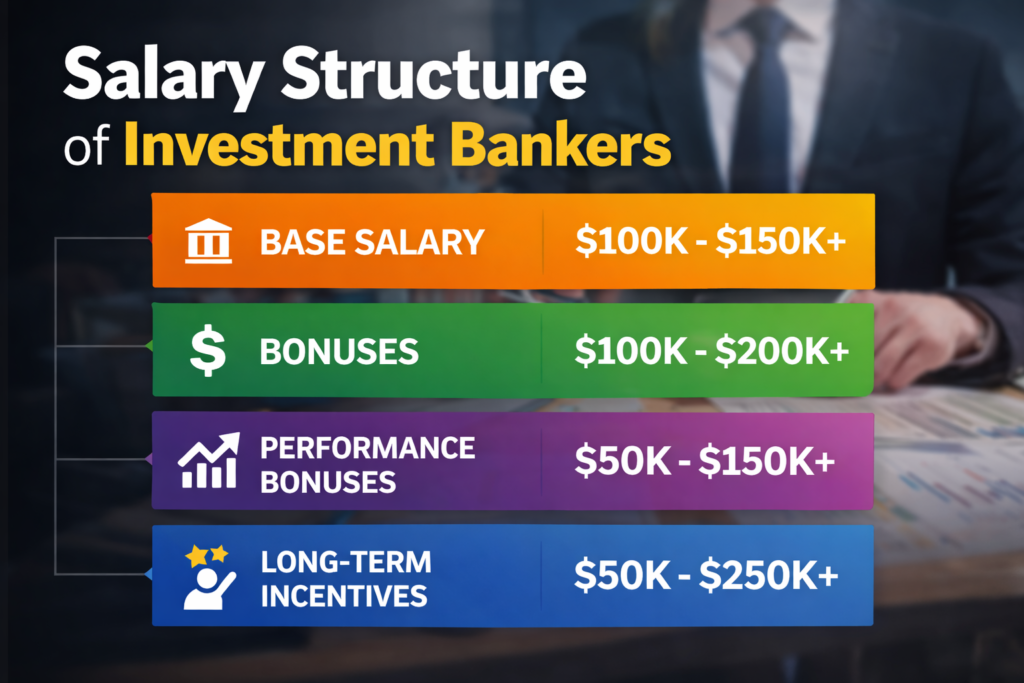
The salary of investment bankers varies significantly depending on their position, experience, and the type of firm they work for. However, the general salary structure in investment banking is divided into base salary and bonuses.
1. Base Salary
The base salary of an investment banker is the guaranteed salary that they receive regardless of their performance or the firm’s financial situation. This is usually paid annually and can differ based on the individual’s role and the firm they work for. On average, an investment banker can expect the following base salary:
- Entry-Level Investment Bankers (Analysts): Analysts, the entry-level positions in investment banking, typically earn a base salary of $85,000 to $120,000 per year, depending on the firm’s size and location.
- Associate-Level Investment Bankers: Associates with 2-3 years of experience in investment banking earn between $150,000 and $250,000 as a base salary.
- Vice President (VP) to Senior Vice President (SVP): At the VP level, salaries range from $200,000 to $400,000, with senior vice presidents earning more.
- Managing Directors (MDs): The managing directors in investment banking are the highest-ranking professionals. Their base salaries typically range from $300,000 to $1 million, depending on the firm.
2. Bonuses
Bonuses make up a significant portion of an investment banker’s total compensation. These bonuses are performance-based and often tied to individual performance, team performance, and the overall profitability of the bank.
- Entry-Level Bonuses: For analysts, the bonuses typically range from $50,000 to $100,000, with some investment banks offering bonuses as high as 100% of their base salary.
- Associate Bonuses: Associates can expect bonuses in the range of $100,000 to $200,000, which can be as high as 100% of their base salary.
- VP to Senior VP Bonuses: At the vice president and senior vice president levels, bonuses can range from $200,000 to $1 million or more, depending on the individual’s contribution and the firm’s performance.
- Managing Director Bonuses: For managing directors, bonuses are where the real money is made. These bonuses can reach several million dollars, sometimes surpassing their base salary by a significant margin.
3. Equity and Profit Sharing
In addition to the base salary and bonuses, some investment bankers also receive equity stakes or profit-sharing opportunities. This typically applies to senior roles such as managing directors and partners in boutique investment banks. These stock options or profit shares allow them to benefit from the success of the firm over the long term.
Factors Affecting Investment Bankers’ Salaries
Several factors can impact how much investment bankers make. These include:
1. Location
Where an investment banker works can have a major influence on their salary. Major financial hubs such as New York, London, Hong Kong, and Tokyo tend to offer higher salaries compared to smaller financial centers. The cost of living also affects compensation. For example, while salaries in New York may be higher than in other locations, the living expenses can be significantly higher as well.
2. Firm Size
The size of the investment bank or financial institution also plays a role in determining salaries. Large multinational investment banks such as Goldman Sachs, Morgan Stanley, and JPMorgan Chase often offer higher salaries and bonuses compared to smaller boutique firms. Larger firms have the resources to offer more substantial pay packages, which often include significant bonuses and equity opportunities.
3. Experience and Seniority
The longer you work in the field of investment banking, the more you can expect to earn. Entry-level analysts and associates start with a relatively modest salary, but with experience, investment bankers can see their pay rise significantly. As you move up the ranks, the earning potential increases, particularly in senior positions such as managing director.
4. Performance
An investment banker’s compensation is closely tied to their performance. In highly competitive environments like investment banking, those who are able to close major deals or bring in significant revenue for the bank often earn larger bonuses. High-performing employees can often earn bonuses that surpass their base salary, making performance an important factor in total earnings.
Investment Banker Compensation: A Breakdown
Here’s a breakdown of how investment banker salaries typically look over the course of a career:
| Position | Average Base Salary | Average Bonus | Total Compensation (Base + Bonus) |
|---|---|---|---|
| Investment Banking Analyst | $85,000 – $120,000 | $50,000 – $100,000 | $135,000 – $220,000 |
| Investment Banking Associate | $150,000 – $250,000 | $100,000 – $200,000 | $250,000 – $450,000 |
| Vice President | $200,000 – $400,000 | $200,000 – $500,000 | $400,000 – $900,000 |
| Managing Director | $300,000 – $1,000,000 | $1 million + | $1.5 million + |
Does Education Play a Role in Investment Banker Salaries?
In investment banking, education plays a pivotal role in determining your initial salary. Most investment bankers hold at least a bachelor’s degree in finance, economics, business, or a related field. Some also pursue an MBA or other advanced degrees to help boost their earning potential and career prospects.
- Undergraduate Degree: A degree from a top university can significantly impact your starting salary. Graduates from prestigious institutions like Ivy League schools or top European universities are often offered higher salaries and are more likely to secure positions in top firms.
- MBA: For investment bankers, an MBA can be a powerful tool to increase earning potential. Graduates from top business schools (e.g., Harvard, Wharton, Stanford) are often offered salaries in the six-figure range even before bonuses are factored in.
- Advanced Certifications: Certifications such as CFA (Chartered Financial Analyst) can also help enhance career prospects and salary potential for investment bankers.

Is Investment Banking Worth It?
While the salary is undeniably attractive, working as an investment banker comes with its own set of challenges. Investment banking is notorious for its long hours and demanding workload, with many professionals working 80-100 hour weeks, especially at the junior level. The pressure is intense, and the pace can be grueling. However, for those who thrive in high-pressure environments and are passionate about finance, the rewards, both financial and personally are significant.
If you’re wondering whether investment banking is worth it, consider both the financial rewards and the lifestyle demands. For many, the compensation, career advancement, and opportunities to work on high-profile deals make it a highly rewarding profession.
Frequently Asked Questions
How much do entry-level investment bankers make?
Entry-level investment bankers, particularly analysts, can expect to earn a base salary between $85,000 and $120,000, with bonuses often making up a large portion of their total compensation.
How much can an investment banker make in bonuses?
Bonuses for investment bankers vary greatly depending on experience and performance. Junior-level analysts can expect bonuses between $50,000 and $100,000, while senior roles like managing directors can earn several million dollars in bonuses.
What factors affect an investment banker’s salary?
The primary factors affecting an investment banker’s salary include their level of experience, the size and location of the bank, individual performance, and the firm’s overall financial performance.
Can I earn equity or profit-sharing in investment banking?
Yes, senior investment bankers, especially those at the managing director level, may receive equity stakes or profit-sharing opportunities, allowing them to benefit from the firm’s long-term success.
Is investment banking a good career path?
For individuals interested in finance, investment banking offers high financial rewards and career advancement opportunities, but it also requires long hours and a high level of dedication. It can be a great career choice for those who thrive in fast-paced, high-pressure environments.
Conclusion
Investment banking remains one of the most lucrative and rewarding career paths in the financial industry. While entry-level salaries may seem modest, the earning potential grows exponentially with experience, especially when factoring in bonuses and profit-sharing opportunities. Senior-level positions, particularly at major investment banks, can offer substantial compensation packages that include base salaries, bonuses, and equity stakes. For those with a passion for finance, the career provides the opportunity to work on high-profile deals and make a significant impact in the financial world.
However, it’s important to note that the demands of investment banking come with long hours and intense pressure. The profession is not for everyone, and success requires not only strong technical skills but also the ability to thrive in a fast-paced, high-stress environment. For those who are up for the challenge, investment banking offers the potential for substantial financial rewards, career advancement, and the chance to work at the heart of global finance.